Hook, Interest, Desire, Action: Master Hunting Expertise in New Zealand — Learn Faster, Hunt Smarter, Leave a Legacy
If you’re after genuine hunting expertise in New Zealand, you’ve come to the right place. This guide walks you through the animals, the seasons, the ethics, the kit, and the exact tactics that work in Aotearoa’s unique landscapes. Read on and you’ll pick up practical steps you can use on your next trip — whether you’re stalking a red stag on a high-country ridge or calling ducks at first light. I’ll keep it real, useful, and a little cheeky when it helps you remember the hard stuff.
When preparing for trips, use reliable resources to sharpen your planning: for detailed kit lists and field-proven choices, see Backcountry Hunting Gear Essentials, which breaks down the must-haves for remote retrievals and alpine days. If you want to align your actions with conservation and respect for wildlife, consult Ethical Hunting Practices to understand fair chase, meat use and stewardship. For broader context about the site and other outdoor topics that tie into hunting culture, visit fishing-hunting-canoeing-new-zealand.com, where trips, guides and local stories are shared. Planning around biology helps: check seasonal calendars at Game Seasons and Management NZ so you time your trip to rut, migration or reduced snowpack. Before you go, make sure you’re familiar with current rules and safety guidance from NZ Hunting Regulations and Safety. Finally, if you want to improve your approach work, gait reading and close-quarters movement, read techniques at Stalking and Tracking Techniques to learn how to find sign, read bedding areas and close the gap with minimal disturbance.
Hunting Expertise: Understanding New Zealand’s Game and Seasons
Hunting expertise starts with knowing which species you’ll encounter and how the seasons change their behaviour. In New Zealand, most game animals are introduced species — but don’t let that fool you. They’re wild, clever, and shaped by a rugged environment. Learn their habits and you’ll be well on your way.
Key game species and what they teach you
Each species offers its own classroom. Spend time on one and you’ll pick up patterns, cues and secret spots.
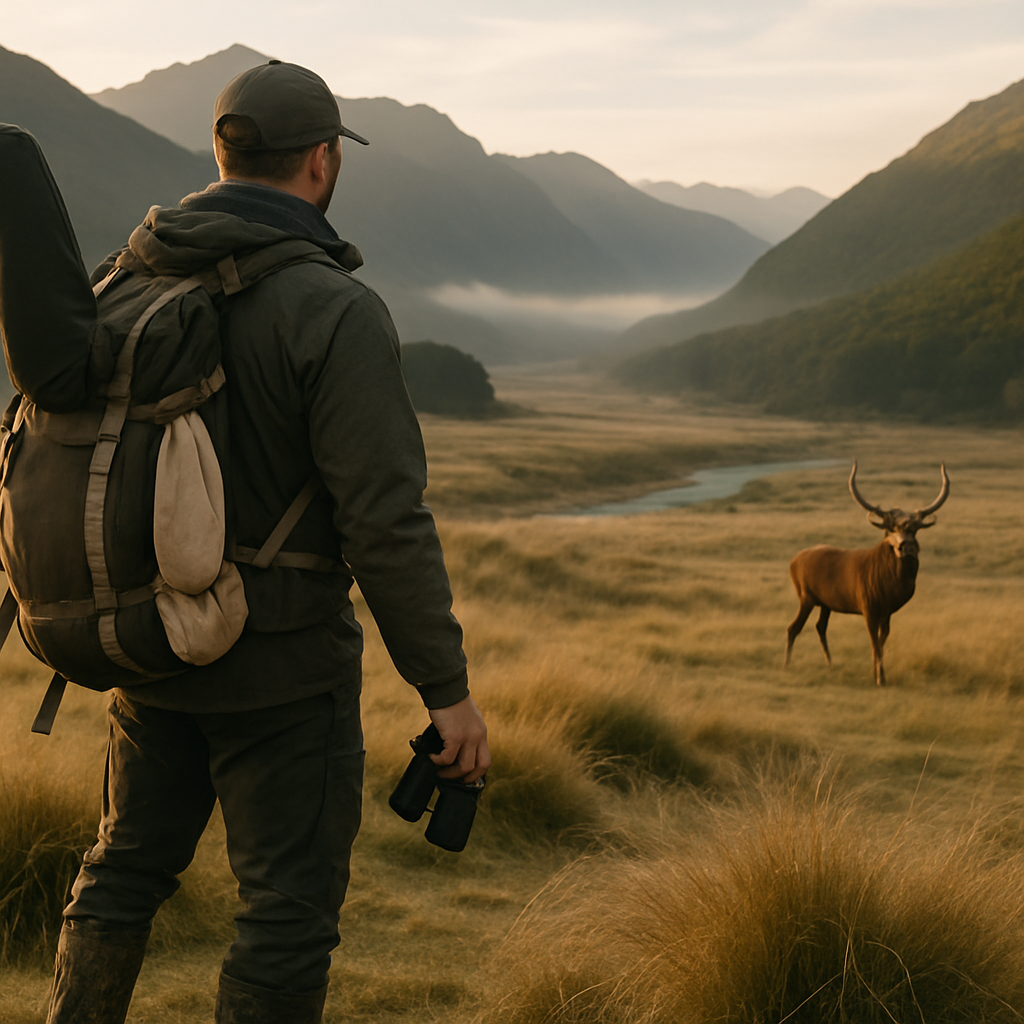
- Red deer: The monarch of the South Island high-country. Watch for rut behaviour in autumn — roaring, wallowing and predictable movements to and from feed areas.
- Sika and rusa deer: Often found in warmer, wetter North Island forests. They’re wary and can vanish into thick bush in seconds.
- Fallow deer: Adaptable. They’ll hang around farm-forest edges and can get surprisingly smart under pressure.
- Tahr and chamois: Alpine specialists. If you love glassing, steep climbs and pure adrenaline, these are your animals.
- Feral pigs and goats: Opportunists that shift with food availability. Pigs especially teach you patience — and how to run a good dogs-and-handler team when allowed.
- Game birds (ducks, pheasants, quail): Weather and habitat dictate success — not luck. Know the water, the wind and when birds move.
Seasonal rhythm — use it, don’t fight it
New Zealand’s seasons shape when and where animals move. Match your plan to their clock.
- Spring (Sep–Nov): Animals regroup after winter. Velvet falls from stags, and movement increases as pastures green up. Good time for stalks in lower high-country as snow melts.
- Summer (Dec–Feb): Heat drives animals to shade and water. Early mornings, late evenings, and alpine ridgelines are your windows.
- Autumn (Mar–May): The rut — a noisy, chaotic, brilliant time. Calling works; stands near known routes pay off.
- Winter (Jun–Aug): Snow pushes animals downslope. Access is harder, but animals are more predictable in valley bottoms and river terraces.
Ethical Hunting and Conservation Principles in NZ
If you want real hunting expertise, add ethics to your toolkit. In New Zealand, hunting often doubles as pest control. Do it responsibly and you help native wildlife, keep access open, and sleep better at night. Seriously — ethical hunters are respected. They get invited back.
Core ethical rules to live by
Simple, non-negotiable basics:
- Fair chase: Don’t stack the deck with unfair methods. Give the animal a chance and the hunt remains sporting.
- Use what you take: Meat and hides are valuable. Wasting animals is unacceptable and often illegal on managed land.
- Minimise suffering: Train with your rifle or bow. Know your effective range and practice ethical shot placement.
- Leave no trace: Pack out rubbish, avoid trampling sensitive vegetation, and protect waterways from contamination.
Conservation contributions — how you can do better
Think of hunting as stewardship. Many introduced species here devastate native birds and plants. Your harvest reduces pressure on fragile ecosystems. Go further by:
- Joining local pest-control ops or contributing to DOC programmes.
- Sharing hunting intel responsibly — don’t broadcast sensitive sanctuary locations.
- Helping with tracking, reporting numbers, or volunteering for culls in critical areas.
Respecting Māori and landowner rights
Respect is more than manners — it’s practical. Land access usually needs permission. Māori values and tikanga (customs) can govern areas and places of significance. Ask, listen and follow guidance. It keeps relationships healthy and doors open for future hunters.
Gear Essentials: What to Pack for NZ Hunting Adventures
Good gear doesn’t make you a better hunter on its own, but the right kit keeps you safe, comfortable and effective. New Zealand terrain can change in an hour — plan accordingly.
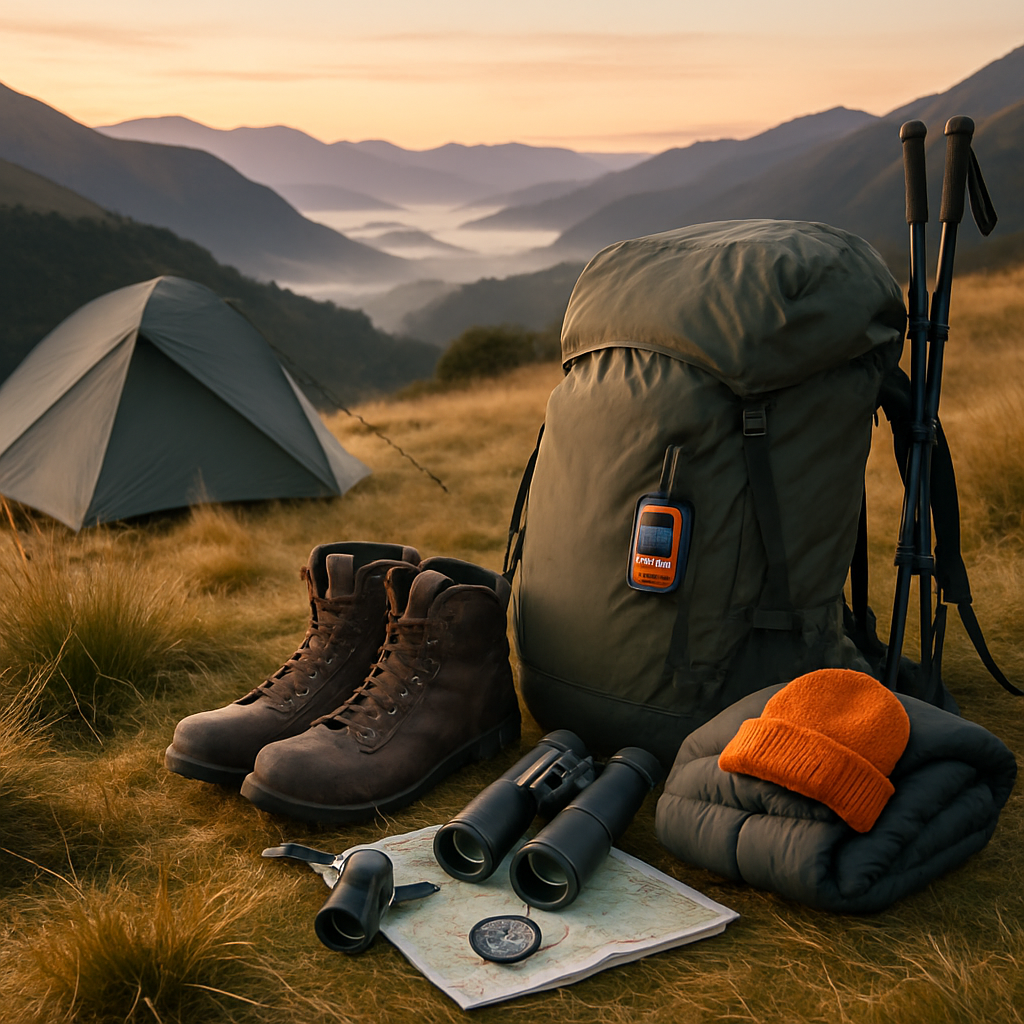
Essential kit checklist
- Firearm and ammo: Pick a calibre that ethically suits your quarry. Common choices for deer are in the .270 to .30-06 range; practice regularly and pack a cleaning kit.
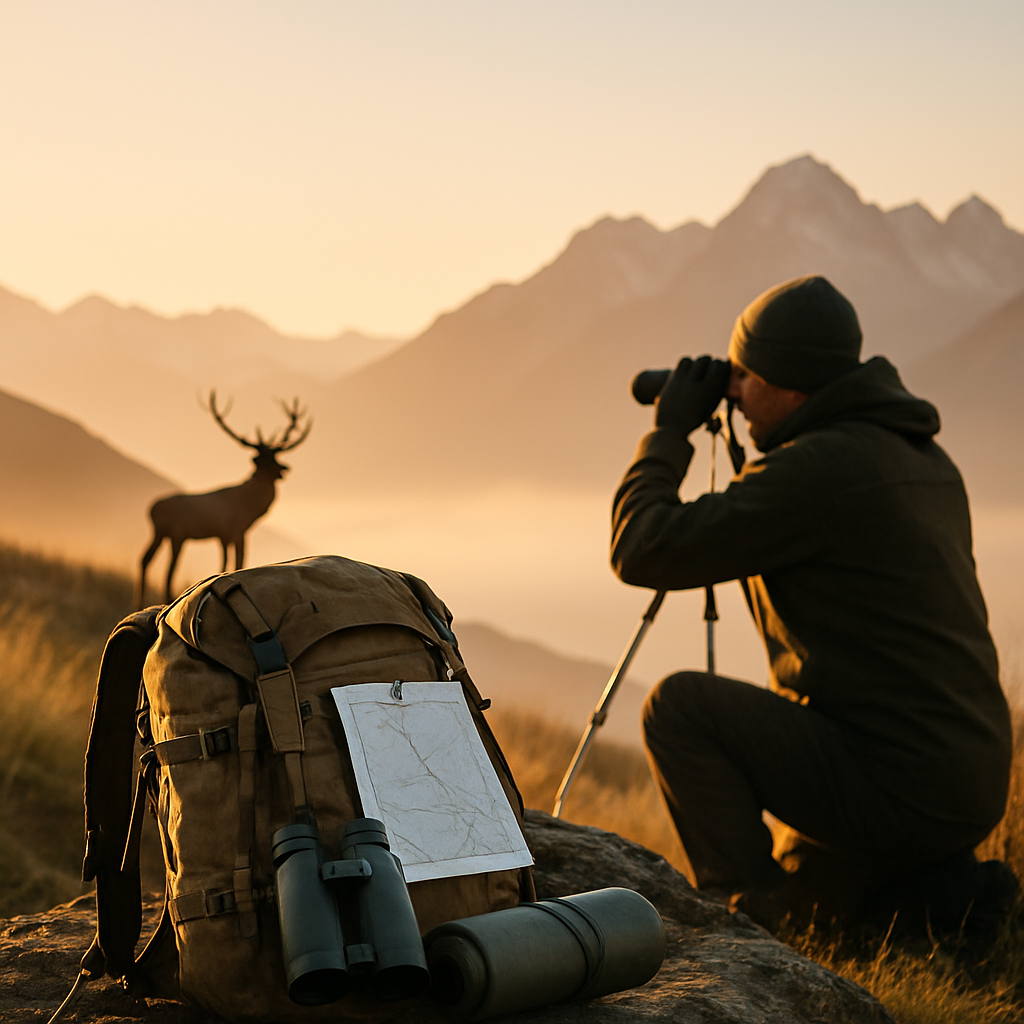
- Optics: A good pair of 8x–10x binoculars and a spotting scope are indispensable. You’ll glass a lot.
- Navigation & comms: Topo maps, compass, GPS or phone with offline maps, plus a PLB or satellite messenger for remote areas.
- Clothing: Layering is king: merino base layers, insulating mid-layers, and a waterproof-breathable shell. Sturdy waterproof boots with good ankle support are non-negotiable.
- Backpack & processing: Durable pack, game bags, tarp, heavy-duty knife, bone saw, and cordage. Plan how you’ll transport meat out of rough country.
- Safety & survival: First-aid kit, emergency bivvy, headlamp, and enough food and water for an extra day.
- Hunting aids: Calls, decoys (for waterfowl), climbing sticks or a game cart for steep retrievals, and dog gear where used legally.
Little extras that matter
Don’t laugh — things like spare batteries, sunscreen, insect repellent, foot-care items and a small field notebook for jotting tracks and rut signs make the trip better. A compact meat thermometer and vacuum-seal bags help if you intend to preserve the harvest on-site.
Strategies for Finding Prime NZ Hunting Spots
Finding prime spots isn’t about luck; it’s about map work, field scouting and building relationships. Start smart and you’ll save days of wasted effort.
Map-based scouting — be a detective
Topo maps and satellite imagery reveal likely game routes: forest edges, saddles, river gutters and tussock basins. Look for:
- Contours that funnel animals into pinch points.
- Transition zones between cover types (e.g., bush edge to open tussock).
- Water sources and seasonal feed areas.
On-the-ground scouting — the slow work pays off
Get there a couple of hours before first light or stay late. Glass ridgelines, check for rubs, droppings, and footprints. Walk quietly and watch wind patterns — animals bed down on leeward slopes and move with scent awareness in mind.
Sources of local intel
Talk to locals: landowners, hunting club members and guides. Join regional forums and social groups. A word of caution: protect sensitive locations that could be overrun if shared widely. Reciprocity matters — offer meat or help in return for permission and tips.
When to hire a guide
New to NZ or heading into technical terrain? A guide is worth their weight in stories and saved footsteps. They speed up learning, add safety and often increase success rates for alpine hunts.
Safety and Regulations: Staying Compliant on Your NZ Hunt
Nothing ruins a good hunt faster than a preventable accident or a brush with the law. Safety and compliance are non-negotiable components of hunting expertise.
Personal safety checklist
- Tell someone your trip plan and expected return.
- Carry a PLB or satellite messenger in remote country.
- Dress in layers and pack for weather swings.
- Practice firearm safety at all times — treat firearms as loaded and know your target and beyond.
- Plan for river crossings and tricky terrain; never underestimate fatigue on retrieval hikes.
Regulations you must know
Rules vary by region and species. Key points:
- Firearm licensing and safe storage laws are strict — comply fully.
- Game bird seasons and bag limits apply; mammals are often considered pests but still subject to local rules.
- Some conservation areas, islands and sanctuaries prohibit hunting to protect native species — check DOC warnings and maps.
- Private land needs written permission. Be clear about conditions and stay within agreed boundaries.
Reporting and accountability
If you participate in a controlled pest operation, follow reporting protocols. Accurate numbers and honest reporting help managers plan effective control measures and maintain hunter access.
Seasonal Tactics: Adapting to NZ’s Diverse Terrain
Great hunting expertise is about adaptability. Every season and terrain demands slight changes — sometimes big ones. Here are practical, season-by-season tactics plus tips for different ground types.
Spring tactics
Animals are restless and visible as they move to better feed. Focus on:
- Glassing early and late when animals move to feed.
- Approaching from ridgelines and contours, staying low and using cover.
- Targeting velvet stags before antlers harden and they move to summer ranges.
Summer tactics
It’s hot; animals seek shade and water. Smart moves:
- Hunt cool hours and consider overnight sits near water sources.
- Alpine ridgelines are accessible — plan early starts and mind the sun exposure.
- For birds, focus on reed edges and sheltered wetlands at dawn.
Autumn tactics (the rut)
Rut season is chaotic — and superb. Use it but don’t overreach:
- Set up near known rutting routes or wallow areas.
- Use calling sparingly and realistically; timing is everything.
- Expect males to move more and potentially cross your path at odd hours.
Winter tactics
Snow and cold concentrate animals. Plan for:
- Hunting lower valleys and river terraces where animals seek food and shelter.
- Conservative movement — slippery slopes and hidden holes make retrievals harder.
- Robust cold-weather gear and emergency options; retrievals may take much longer.
Terrain-specific tactics
Match your method to the ground:
- Alpine/tussock: Glass first, stalk with wind awareness, travel light and fast.
- Dense bush: Move slowly, control scent, and hunt ambush points near clearings.
- Coastal scrub: Watch tides, plan boat retrievals where needed, and expect animals to bolt to headlands.
- Wetlands: Use decoys and calls for ducks; be careful with biosecurity between wetlands to avoid spreading pests.
Practical Tips, Common Mistakes and a Final Checklist
Common mistakes to avoid
- Underestimating terrain and overpacking. You can’t carry everything up a 45-degree tussock slope.
- Poor planning for meat retrieval. Think ahead: who’s carrying, and how will you keep meat cool?
- Ignoring local advice. Locals know traps, tricky ridges, and seasonal hazards.
- Disrespecting landowners or tikanga. One bad interaction can close access for everyone.
Final pre-hunt checklist
- Check season dates and any special local rules.
- Secure land access permissions in writing.
- Pack layers, comms, first aid, and emergency shelter.
- Prepare for meat care and retrieval logistics.
- Tell someone your plan, including exit routes and expected return.
- Practice ethical shot placement; a quick, humane kill is everything.
Frequently Asked Questions — Hunting Expertise
Do I need a firearms licence to hunt in New Zealand, and how do I transport weapons legally?
You do need to comply with New Zealand firearms law: hold a current firearms licence and follow safe storage and transport rules. That means locked, unloaded firearms in an approved case while moving them in a vehicle, separate from ammunition. If you’re a visitor, you’ll need to check whether your home-country licence is accepted and follow customs/import rules for firearms — sometimes a temporary permit is required. Always check the most recent guidance from NZ Police before you travel, and plan transport and storage ahead so you don’t get caught out at a farmhouse gate or ferry terminal.
Can I hunt on public conservation land and are there areas that are off-limits?
Yes, much of New Zealand’s public conservation land allows hunting of introduced pests and certain game, but some reserves, islands and sanctuaries are closed to hunting to protect native species. Always check DOC maps and signage, and if in doubt contact the local DOC office. Some areas may also have temporary restrictions due to pest-control operations, helicopter work or conservation projects. If you’re planning a trip, confirm access and any permit requirements well in advance.
When is the best season to hunt deer, tahr or pigs in NZ?
The “best” season depends on your style and target species. For red deer rutting activity and calling opportunities, aim for autumn (March–May). If you prefer alpine tahr and chamois with better access and stable ridgelines, summer (Dec–Feb) is prime. For pigs and goats, timing revolves around mast events and feeding cycles; after fruitfalls or during dry spells they concentrate and are easier to find. Use seasonal calendars and local intel to pick windows that match the animal’s behaviour and your fitness level.
What are the essential items I must pack for a backcountry hunt?
At minimum pack layers for variable weather, reliable footwear, a good pack, optics, navigation and a PLB or satellite messenger. Bring a quality knife, game bags, and materials for meat handling. Ammo and firearm-cleaning gear are obvious, but don’t forget foot-care supplies, spare batteries, and a small repair kit. If you’re heading into alpine country, lightweight bivvy, crampons or gaiters and extra food matter. Check the Backcountry Hunting Gear Essentials for a deeper list.
How do I approach landowners for hunting permission?
Be straightforward and respectful. Approach landowners well before the intended trip, explain what you plan to do, what dates you’re considering, and any measures you’ll take to reduce impact (e.g., leaving gates as found, taking trash out). Offer to share meat or help on farm work if appropriate, and get permission in writing where possible. Good manners and honouring agreements maintain access for everyone, so treat permission as a privilege, not a right.
Are guides necessary, and how do I find a reputable guide?
Guides aren’t strictly necessary, but they’re extremely helpful — especially if you’re new to the country, short on time, or heading into technical terrain. A guide brings local knowledge, safety skills and likely a higher success rate. Find reputable guides through local hunting clubs, forum recommendations, or direct listings on regional tourism or hunting websites. Always ask for references, proof of licensing and clear terms for meat sharing and retrieval logistics.
How should I handle and transport meat from remote areas?
Care for meat immediately: gut and cool it, use game bags to protect from flies, and try to keep it shaded and dry. In warm weather move meat to refrigeration as quickly as possible — vacuum seal or use ice where available. Plan retrieval routes and manpower in advance; in rough country you may need multiple trips or a meat sling for helicopter lifts. Know local rules about fresh meat transport, and have a plan for processing or freezing once you reach civilization.
What biosecurity steps should I take between hunting wetlands or across regions?
To avoid spreading pests and disease, clean gear, boots and vehicles between wetlands and regions. Remove mud and plant material, dry gear thoroughly, and dispose of carcass waste responsibly. When moving between islands or isolated reserves, extra care is essential — some areas have fragile ecosystems that can be devastated by introduced pathogens or weeds. Simple steps like cleaning boots and nets can make a huge difference.
Can foreigners hunt in New Zealand and what paperwork is needed?
Foreigners can hunt in New Zealand, but requirements vary. You’ll need to follow firearm import/export procedures, hold any required permits, and comply with local firearm licensing rules while in-country. If you’re hiring a guide or using a business, they’ll usually help with these logistics. Also, ensure you understand visa rules and customs restrictions for transporting game meat out of NZ if that’s your intent. Contact NZ authorities and your guide ahead of travel to smooth the process.
How can I improve my stalking and tracking skills quickly?
Practice observation and patience: spend time glassing, learn to read droppings and tracks, and hone wind and scent awareness. Short, focused field trips where you concentrate on sign-reading are invaluable. Use resources like Stalking and Tracking Techniques and consider joining local club trips or guided tutelage — learning from someone experienced accelerates progress more than solo trial-and-error.
How can I contribute to conservation through my hunting activity?
You can contribute by targeting pest species in ecologically sensitive areas, participating in community pest-control projects, and reporting numbers and locations to local managers. Follow ethical practices to minimise non-target impacts, volunteer for DOC or local group efforts when possible, and share useful data (not sensitive locations) to help long-term management. Responsible hunters are essential allies in protecting New Zealand’s native biodiversity.
Mastering hunting expertise in New Zealand is a long game. It’s about learning animals, seasons, and terrain — and balancing sport with stewardship. Get out there, listen to the land and the people who know it, and make every trip a learning experience. If you bring respect, good kit, and a willingness to adapt, the mountains, bush and waterways will reward you. Tight lines and steady hands — and remember: leave the place better than you found it.