Ready for the Wild? Master the Backcountry Hunting Gear Essentials for NZ and Hunt with Confidence
You love the idea of a sunrise on a tussock saddle, the hush of beech forest, maybe the distant bark of a stag — but you also know New Zealand’s backcountry won’t cut you any slack. Gear matters. The right kit keeps you safe, comfortable, and ethical; the wrong kit can turn an epic trip into a lesson you don’t want to learn the hard way. In this guide I’ll walk you through Backcountry Hunting Gear Essentials, focused on real conditions in Aotearoa: wet winters, sun-baked tussocks, steep ridgelines, and remote access. No fluff — just practical, actionable advice so you head out prepared and come back with stories, not regrets.
If you want to make sure your decisions align with respect for animals and habitat, our Ethical Hunting Practices page offers clear, NZ-specific guidance on fair chase, humane shots, and low-impact fieldcraft; this helps you make smart choices that keep access open. Planning around seasons and legal requirements is equally important, so check Game Seasons and Management NZ for up-to-date rules, season windows and regional nuances that affect when and where you can hunt. For a broader set of tips on technique, gear, and local know-how, explore our hub at Hunting Expertise, which collects articles and advice designed to help you prepare responsibly and ethically before every trip.
Backcountry Hunting Gear Essentials: What Every NZ Hunter Needs
Before you pick brand-new gadgets or copy someone else’s kit list, think about the constants. Whether you’re stalking red stag on the Southern Alps, hunting pigs in the North Island bush, or glassing chamois on alpine bluffs, some essentials never change. These are the items that make the rest of your gear meaningful.
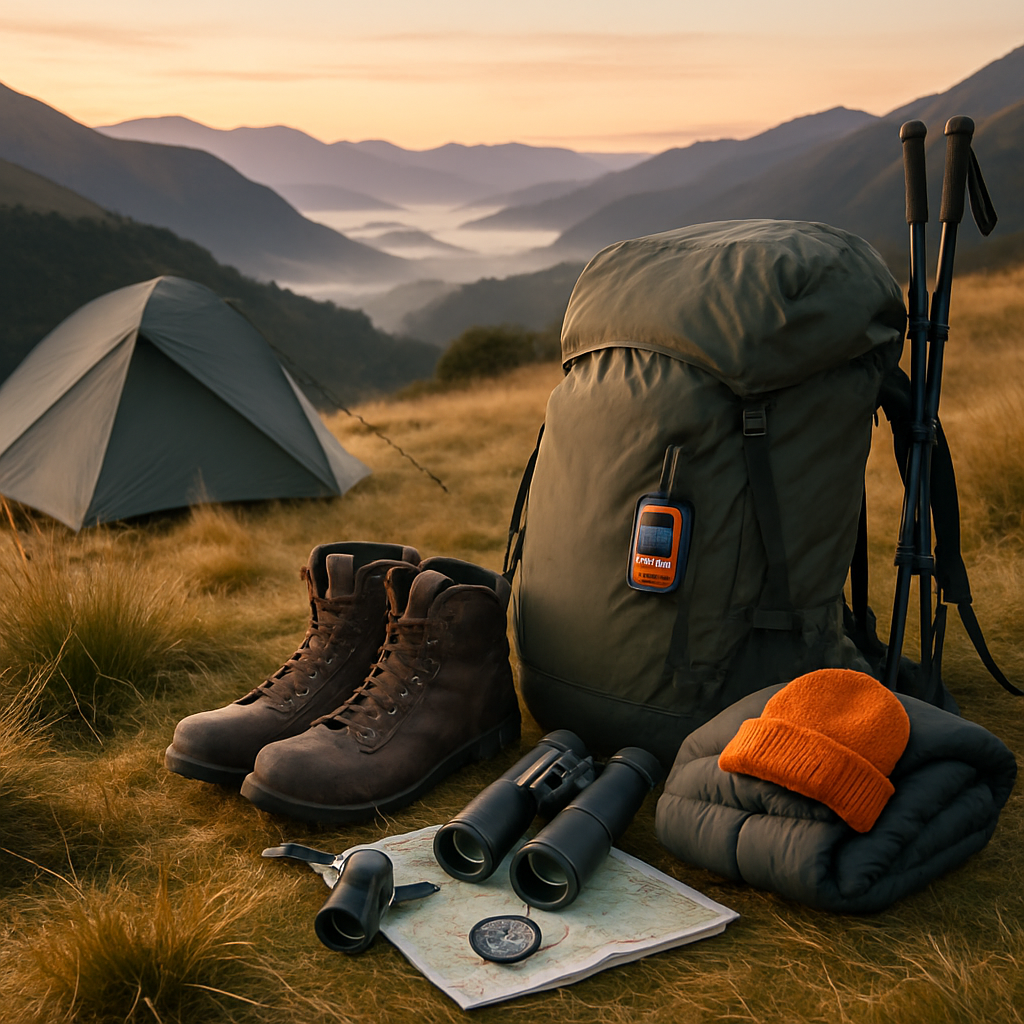
Core kit that should never be forgotten
- Reliable footwear: Broken-in boots with good tread and ankle support. In NZ you’ll cross rivers, climb tussock, and bash through matagouri — choose accordingly.
- Pack suited to the trip: For day trips 20–35L is fine; multi-day hunts need 45–70L with a solid hip-belt and a rain cover.
- Weatherproof shelter: A tent, hammock/tarp system, or bivy that can handle high wind and heavy rain. Lightweight doesn’t mean flimsy.
- Warm sleep system: Insulated sleeping bag and pad rated for expected nights — 0°C rating is common for many NZ seasons.
- Food and fuel: Stove, fuel canister or alcohol stove, lightweight cookware and enough calories to sustain effort in cold wet conditions.
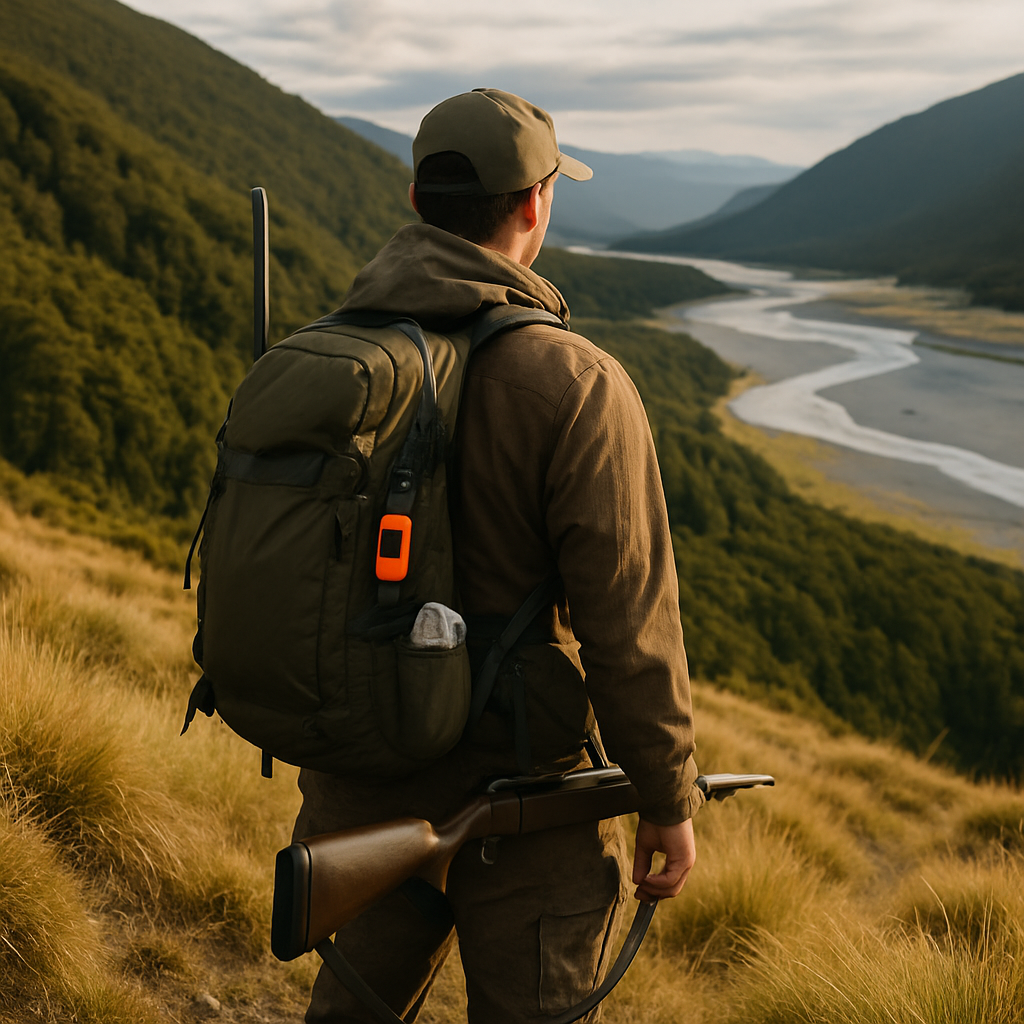
- Navigation & comms: Paper topo map, compass, GPS or offline smartphone maps, and a PLB or satellite messenger for remote areas.
- First aid & repair kit: A backcountry first aid kit and basic repair items — duct tape, cordage, sewing kit, spare buckles.
- Game care tools: Sharp knives, game bags, and means to transport meat out — this matters ethically and practically.
Tip: assemble these basics, then test them on a short trip. Gear you don’t practice with is almost as bad as not having it.
Backcountry Hunting Gear Essentials for New Zealand’s Rugged Terrain
New Zealand’s terrain is wildly varied. The gear you bring should reflect the ground underfoot more than last year’s trend. Here’s how to pick and adapt your kit by terrain type.
River crossings and braided rivers
South Island riverbeds and fast alpine streams can ruin boots and plans. You’ll want footwear that drains and dries quickly on a long hunt, plus a trekking pole and the humility to ditch your pack when crossing deep water.
- Consider lightweight water shoes or pack a spare pair of dry socks in a sealed bag.
- Use a simple cord sling or grab line with your pack to stabilize or empty it if you end up swimming.
Thick bush and matagouri country
North Island and lower-altitude bush require abrasion resistance and a bit of patience. Matagouri and wilding broom laugh at thin nylon.
- Wear tough, long pants and a durable mid-layer. Gaiters protect calves from scratches and wet grass.
- A bush knife can help clear a path where tracks are overgrown, but only use tools responsibly and where legal.
Alpine ridgelines and tussock flats
High country hunts demand windproof, warm, and lightweight gear — and the ability to shelter quickly from sudden blasts of weather.
- Bring a tent with strong guylines, an extra insulating layer, and a compact windproof shell.
- Microspikes or crampons for icy approaches; consider an ice axe if routes get technical.
Long approaches and meat extraction
If you’re packing miles to your hunt, weight matters. But so does the ability to get heavy meat out. Balance weight with durability.
- Invest in a frame pack or meat-specific sled for heavy hauls.
- Plan extraction routes and be realistic about what one person can carry out — caching meat or arranging a vehicle pick-up can save the day.
Backcountry Hunting Gear Essentials: Clothing, Layers, and Weather in NZ
Weather here changes like a mood — sunny, windy, raining, then hail. Your clothing system should let you add or remove layers quickly and keep you dry while you work hard and sit cold.
Layering strategy that actually works
Think of layers as a toolkit: base to move sweat away, mid for active warmth, insulation for resting, shell for storms.
- Base layer: Merino or synthetic — wicks sweat and keeps smell down on longer hunts.
- Mid layer: Fleece or synthetic jacket — good for all-day warmth during movement.
- Insulation: Down or synthetic puffy for camp and cold sits; bring a wet-weather-friendly synthetic if you expect rain.
- Shell: Waterproof-breathable jacket and overtrousers with taped seams. Don’t rely on cheap raincoats that flood you with your own sweat.
Hands, head, and feet — the small things that save you
Cold toes and numb fingers ruin hunts. Bring spares and think about functionality.
- Waterproof gloves plus a lighter dexterous pair for shooting and field dressing.
- A warm beanie and a sun hat — yes, both. NZ sun can be cruel even on cold days.
- Socks: merino or wool blends, plus a sealed dry pair for camp.
Concealment vs safety
Camouflage is handy, but so is being found if something goes wrong. Consider an orange inner layer or hat that can be revealed in emergency — choose pieces that balance stealth and safety.
Backcountry Hunting Gear Essentials: Navigation, Safety, and Survival in New Zealand
Gear is only as good as the knowledge to use it. New Zealand’s remote valleys and fast-changing weather make planning and redundancy non-negotiable.
Navigation gear and habits
A GPS is great — until the battery dies. Paper maps and a compass are the real lifelines.
- Always carry a paper topo map and compass and know how to use them.
- Use a GPS or phone with offline maps, but carry spare batteries or a power bank.
- Plan routes with escape options and realistic time estimates; night travel in NZ bush is unforgiving.
Emergency communication
Cell coverage is patchy. A PLB (Personal Locator Beacon) or satellite messenger is worth its weight in gold when you’re out of range.
- Activate a PLB only in life-threatening situations. For non-emergencies, a satellite messenger with two-way messaging can get help or advise that pick-up is delayed.
- Tell someone your plan, route, and expected return. Check in when you can.
First aid and survival skills
Practice makes a difference. A first aid kit is only useful if you’ve rehearsed common scenarios: bleeding control, splints, shock. Consider a wilderness first aid course.
- Include trauma supplies suitable for hunting injuries and know how to use them.
- Fire-starting kit, emergency shelter, and a headlamp with red mode should be standard.
Backcountry Hunting Gear Essentials: Optics, Scent Control, and Game Care in NZ
Spotting game, staying undetected, and treating harvested animals respectfully — these are the crafts of the hunter. Gear choices here directly influence success and ethical outcomes.
Optics and observation
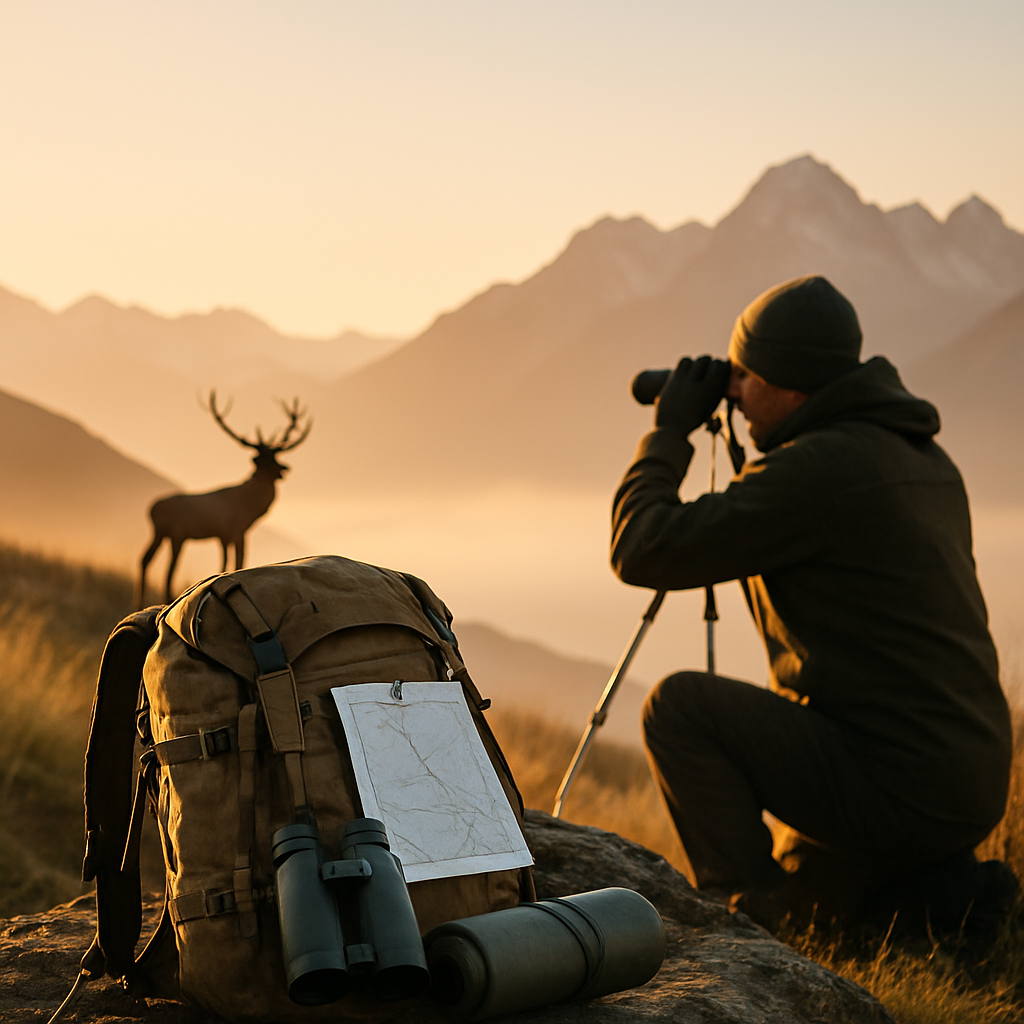
Good optics extend your hunt. Invest in optics that work for the distances you’ll typically scout.
- Binoculars: 8×42 or 10×42 are versatile; choose good low-light performance for dawn and dusk glassing.
- Spotting scope: indispensable for large open areas and ridgeline glassing.
- Lens caps, harness or strap and a small lens cloth — the weather’s wet and optics get dirty fast.
Scent control that makes sense
NZ wind patterns are sneaky. You can have the best scent-proof kit and still get busted by a gust. Use gear wisely, not obsessively.
- Wash clothing with scent-free soap, store in sealed bags, and limit strong-smelling foods on the trip.
- Read wind and terrain — use ridges and slope to your advantage, not just scent-blocking sprays.
Game care: field dressing to extraction
Leaving meat to spoil is disrespectful and bad hunting. Good fieldcraft makes retrieval manageable.
- Carry several sharp knives, a bone saw, and durable game bags. Breathable fabric prevents spoilage better than plastic.
- Cool meat quickly where possible; in warmer months plan to pack out to shade or hang away from sun and flies.
- Have a plan for heavy animals: sleds, packs, or caching with clear marking and retrieval windows.
Backcountry Hunting Gear Essentials: Stewardship and Ethical Gear Choices in New Zealand
Hunters in New Zealand are guardians of access and the wild character of the land. Choosing gear that minimizes impact and follows legal and ethical norms keeps tracks open and ecosystems healthy.
Leave no trace and low-impact choices
Small choices add up. Reusable containers, minimal packaging, and not lighting fires in sensitive areas go a long way.
- Use compact stoves and avoid open fires in fragile alpine zones; where fires are allowed, keep them small and controlled.
- Pack out all non-biodegradable waste; where possible, carry out gut piles or bury them as local rules require to avoid attracting pests to tracks and huts.
Legal and ethical considerations
Respect DOC rules, regional restrictions, and private land access arrangements. Your behaviour determines whether access continues for everyone.
- Check permits and seasons; follow bag limits and reporting requirements for certain species.
- Use humane methods and avoid wounding — that’s both ethical and practical for meat recovery.
Choose durable, repairable gear
Buying cheap to replace often is worse for the environment than buying quality and repairing when needed. Bring repair supplies to fix things in the field.
- Sewing kits, spare buckles, and cordage help you extend gear life and avoid emergency returns because of a broken strap.
- Buy from brands that offer repairs or spare parts if you can — it’s getting easier to find sustainable options even in outdoor gear.
Packing Checklist: A Practical Summary
Below is a printable-style checklist to use before you head out. Tailor quantities to trip length and expected conditions, but don’t skimp on redundancy for safety items.
| Item | Why it matters |
|---|---|
| Sturdy boots & spare socks | Prevents blisters and keeps feet healthy |
| Waterproof shell & overtrousers | Key defense against hypothermia |
| Backpack with rain cover | Protects gear and balances load |
| Map, compass, GPS/phone | Navigation redundancy saves lives |
| PLB or satellite messenger | Emergency communication in remote zones |
| First aid kit & training | Handle trauma and illness in the field |
| Binoculars / spotting scope | Detect game and plan stalks |
| Field knife, game bags, bone saw | Humane kills and clean meat handling |
| Tent / bivy & sleeping system | Shelter from wind and rain |
| Repair kit, spares, multi-tool | Fix gear fast and avoid abandoning trips |
Frequently Asked Questions (FAQ)
What are the absolute “Backcountry Hunting Gear Essentials” I should never leave without?
You should always carry proper boots, a weatherproof shelter, a warm sleep system, a map and compass (plus an electronic backup), a PLB or satellite messenger, a compact first aid kit, reliable cooking gear, and game care tools like knives and game bags. These essentials cover safety, shelter, navigation, and humane game handling — the real pillars of any safe NZ backcountry hunt.
How do I choose the right boots for New Zealand’s varied terrain?
Pick boots with solid ankle support and sticky soles for tussock and braided rivers. If you expect river crossings, consider quick-drying options or carrying lightweight water shoes as backups. Always break in boots on local hikes before committing them to a long hunt — blisters and sore feet are trip killers. If you’re unsure, go with high-cut waterproof-breathable boots and bring gaiters for scrub and wet grass protection.
Do I really need a PLB or can my phone do the job?
Your phone is useful but unreliable in remote NZ valleys. A PLB is the safest option for life-threatening emergencies; it transmits your location to emergency services without ongoing subscription fees. A satellite messenger gives two-way text capability so you can communicate non-emergencies or coordinate pickups. If you go into truly remote or untracked country, take a PLB or sat device — it could save your life.
How should I layer up for unpredictable New Zealand weather?
Use a three- to four-layer approach: a moisture-wicking base layer (merino or synthetic), an insulating mid layer (fleece), a puffy insulation for rest periods (down or synthetic), and a waterproof-breathable shell. Add waterproof overtrousers and gloves for wet weather. The trick is quick adjustments — vent or shed layers during hard work, then add insulation during sits or at camp.
What’s the best way to cross rivers safely while hunting?
Scout crossing points upstream and downstream, use a trekking pole for balance, unclip or open your pack so you can ditch it if you fall, and cross with a partner if possible. If water’s chest-deep or fast, find another route. Waterproofing spare socks and clothes in sealed dry bags will make the rest of the day bearable if your feet get wet.
How do I care for game in the field to avoid spoilage and waste?
Field-dress quickly, cool the carcass out of direct sun, and use breathable game bags to protect meat from flies while allowing airflow. Use sharp knives and a bone saw for efficient quartering, and plan extraction routes ahead of time so you can get meat to a cooler spot fast. If you can’t pack it out immediately, cache it in a shaded, safe spot with clear markers for retrieval.
Where can I find up-to-date season, permit, and bag limit information?
Always check the relevant regional authorities and DOC information for the area you’ll hunt. Our Game Seasons and Management NZ page is a good starting point for season windows and regulatory notes, but verify details with local councils or DOC offices for the most current rules.
How can I minimize my environmental impact while hunting?
Follow Leave No Trace practices: use a stove instead of open fires in sensitive areas, pack out all rubbish and non-biodegradable waste, avoid creating new tracks through fragile vegetation, and dispose of gut piles per local guidance. Buy durable gear you can repair rather than disposable items, and respect closed areas and sensitive habitats to help keep access for all hunters.
Is scent control worth the effort in NZ hunting conditions?
Scent control helps, but wind and terrain often dictate success more than sprays and special underwear. Wash clothes with scent-free soap, store garments in sealed bags, and plan approaches using ridges and downwind strategies. Don’t rely solely on scent-blocking products — use them as part of a broader approach that includes good stalking and wind reading.
What first aid kit and training should I have for backcountry hunting?
Carry a wilderness-appropriate first aid kit with bleeding control supplies, trauma dressings, splinting materials, blister care, and medications for common issues. Crucially, take a wilderness first aid or remote first responder course so you know how to use the kit under stress. Practice simple procedures and scenarios before you go — preparation is as valuable as the kit itself.
Can I hunt alone, and what precautions should I take if I do?
You can hunt solo, but it increases risk. If you go alone, tell someone your detailed plan, carry a PLB or satellite messenger, build conservative time buffers, and pack redundancy for navigation and shelter. Be realistic about the terrain and weight of meat you can extract alone; many hunters prefer at least one partner for safety and practicality.
Final thoughts and next steps
Backcountry Hunting Gear Essentials aren’t about having the most expensive kit; they’re about being sensible, prepared, and respectful of the land you hunt. Start with the basics, practice using every piece of gear before you count on it, and build redundancy into safety and navigation. Want a quick win? Run a gear checklist the night before every trip and practise packing and unpacking under time pressure — that small habit will save you frozen fingers and headaches in the long run.
Go prepared, hunt ethically, and enjoy the wild. If you’ve got a kit question — like whether to take crampons for a late-season trip or how many game bags are enough for a pig — ask away. Real-world advice beats theory every time, and I’m happy to help you fine-tune a pack list for your next NZ hunt.